Ontario Fish Species
What swims in Ontario water, how to tell one fish from another, and how people catch them. Written for the person standing on the dock holding something they can't quite name.
Ontario has something like 150 species of fish in its lakes and rivers. Most of them nobody fishes for. This page covers the ones you will actually meet — the fish people target, and the ones that turn up on the end of the line whether you wanted them or not.
Every entry tells you how to recognise the fish, where it lives, roughly how big it gets, and how people catch it. You will notice there are no open seasons, size limits or catch limits anywhere on this page. That is deliberate. Those rules change year to year and they are different in every Fisheries Management Zone — printing them here would be a good way to give somebody out-of-date information and a fine to go with it. Check the fishing regulations page for how the zones work, and always confirm against the current Ontario Fishing Regulations Summary before you keep a fish.
Walleye & Perch
The two fish most Ontario families actually eat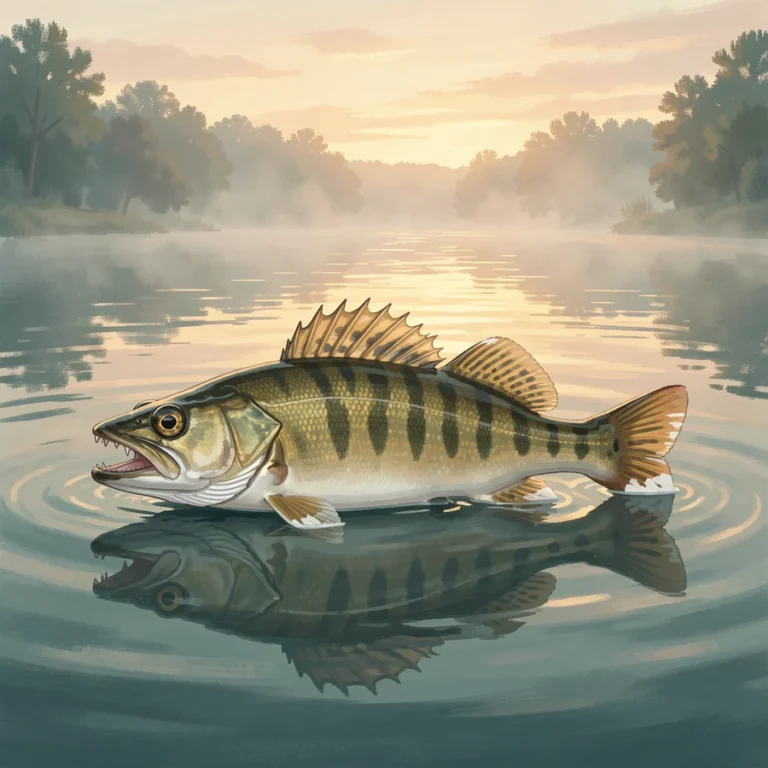
Walleye
Sander vitreus
Also called Pickerel, yellow pickerel
Brassy gold-olive sides with faint dark bars, a spiny front dorsal fin, and a mouthful of real teeth. The giveaway is the eye — large, glassy and milky, because it is built for low light. Second giveaway: a clean white tip on the bottom lobe of the tail.
Almost everywhere in Ontario. Big cold lakes, shield lakes, rivers and the Great Lakes. They sit deep and in the shade during bright daylight and move shallow to feed at dawn, at dusk, and after dark.
Most are 14–22 in. Anything over 27 in is a big fish and is usually a female worth putting back.
Jig and minnow, worm harness behind a bottom bouncer, or trolling crankbaits along a break line. Slow down and fish low light — walleye feed when you can barely see your rod tip.
Yellow Perch
Perca flavescens
Also called Perch, lake perch
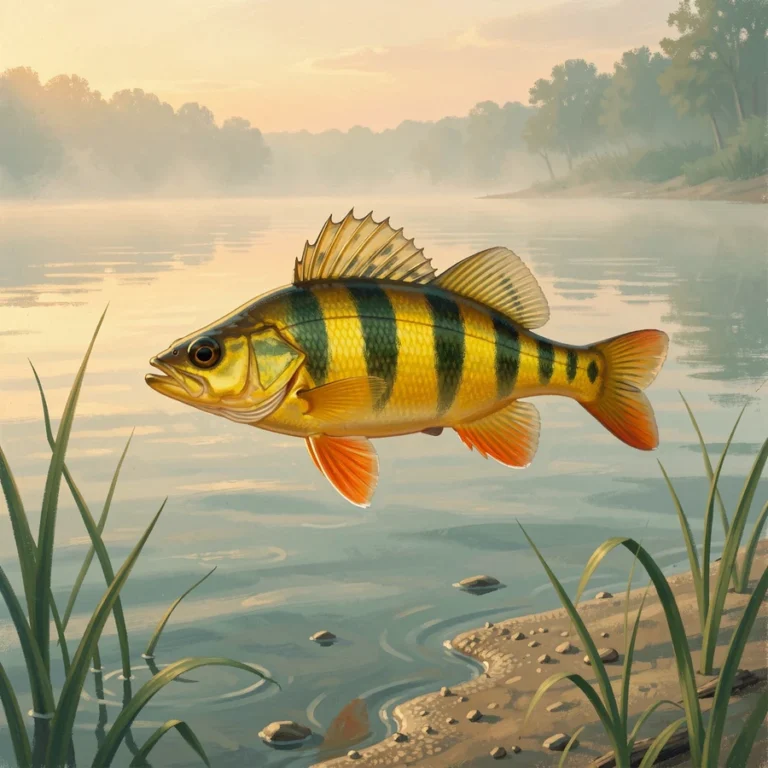
Bright yellow-gold with six or seven bold dark bars down the sides, orange lower fins, and two separate dorsal fins — the front one spiny. A walleye in miniature, minus the teeth and the glassy eye.
Everywhere there is weed and sand. They travel in schools, so where you catch one you will catch ten. A staple through the ice.
6–10 in is normal. A 12 in perch is a genuinely good one.
A small hook, a split shot and a piece of worm will out-fish anything clever. Small jigs and minnows through the ice. When the bites stop, move — the school moved.
Pike & Muskie
The ambush predators — bring a net and long pliers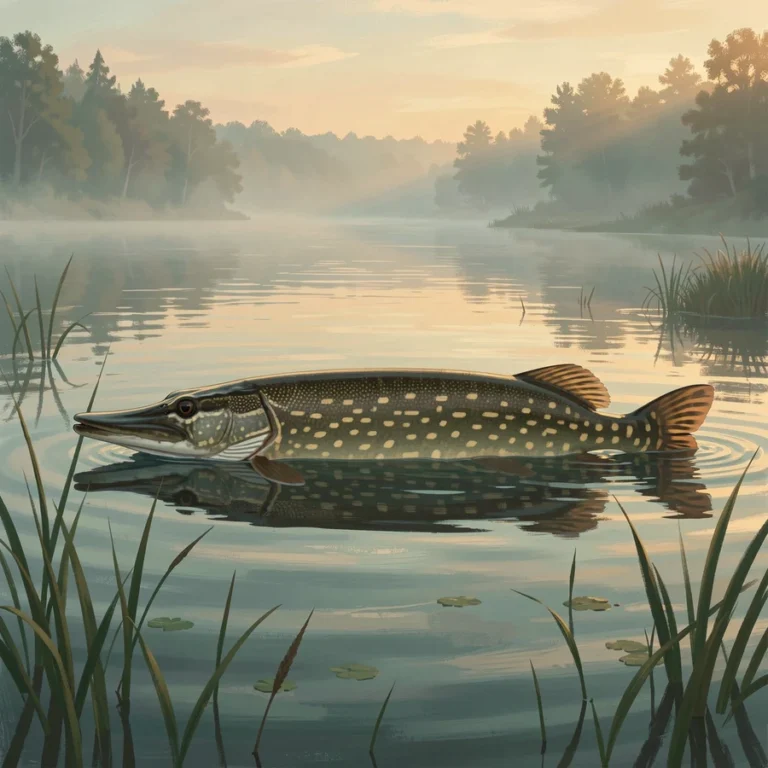
Northern Pike
Esox lucius
Also called Jack, hammerhandle (the small ones)
Long torpedo body, flat duck-bill snout, and a single dorsal fin set way back near the tail. Dark olive sides carrying rows of LIGHT cream-coloured bean-shaped spots. Light spots on dark — remember that, it is how you tell a pike from a muskie.
Weed beds, bays, river mouths, the edge of any cabbage flat. They like shallow warm water in spring and slide deeper as summer wears on.
20–30 in is everyday. Over 40 in is a trophy anywhere in the province.
Spoons, spinnerbaits, big soft plastics, or a sucker under a float. Use a wire or heavy fluorocarbon leader — they will bite straight through ordinary line, and they will do it on the first cast of the day.
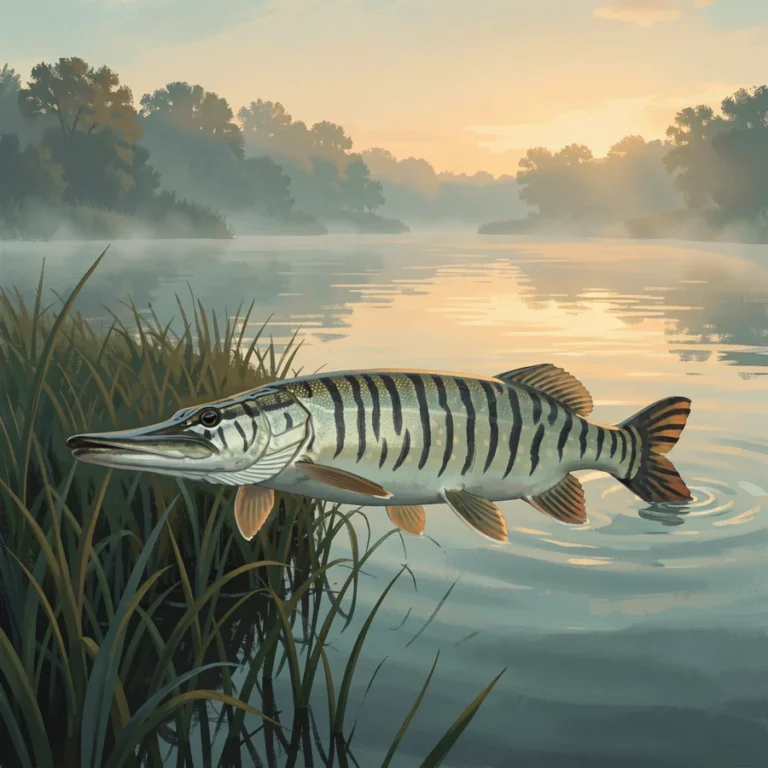
Muskellunge
Esox masquinongy
Also called Muskie, musky, the fish of ten thousand casts
Same torpedo shape as a pike but bigger, paler, and marked the other way round — DARK bars and blotches on a LIGHT background. The tail is deeply forked with sharp pointed tips; a pike's is rounder. Count the pores under the jaw if you want to be certain: a muskie has seven or more per side, a pike five or fewer.
Big water with big forage — the Kawarthas, the St. Lawrence, Georgian Bay, Lake of the Woods, the French River.
34–45 in for a good one. Fifty inches is the number everyone chases.
Large bucktails, gliders, big rubber and trolled crankbaits, all on heavy tackle. Handle them in the water, in a big cradle net, with proper jaw spreaders and cutters ready. A muskie that is played to exhaustion and held up for photos often does not survive — this is a fish to release fast and release well.
Bass
Pound for pound the hardest fight in the province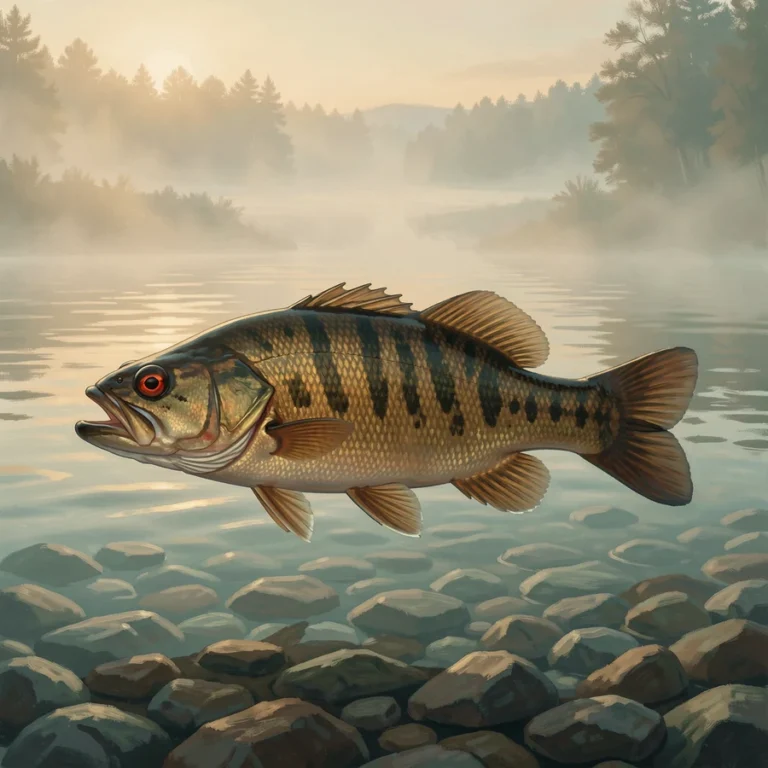
Smallmouth Bass
Micropterus dolomieu
Also called Smallie, bronzeback
Bronze-brown to olive with dark VERTICAL bars, a red-orange eye, and dark bars streaking back across the cheek. The upper jaw stops under the eye, not past it. That jaw line is the reliable way to separate it from a largemouth.
Rock. Points, shoals, boulder shorelines, current seams in rivers. Clear cool water. Common through the Great Lakes, the shield lakes and the Grand River.
12–17 in typical. A four-pounder is a very good Ontario smallmouth.
Tube jigs, drop-shot, ned rigs, crayfish imitations, topwater at first light. They jump — expect it and keep the rod tip down.
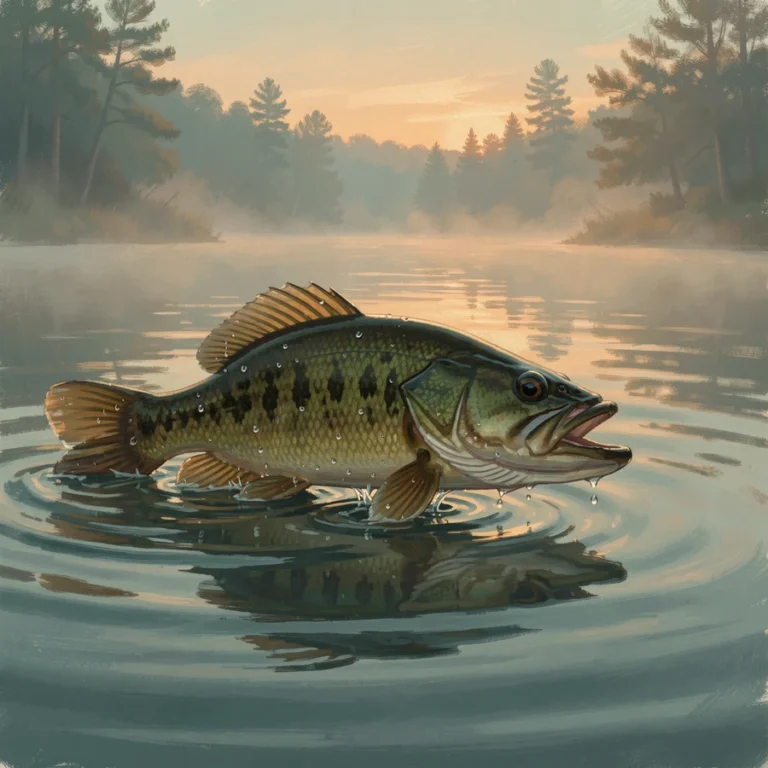
Largemouth Bass
Micropterus salmoides
Also called Bucketmouth
Green sides with a dark blotchy stripe running HORIZONTALLY down the middle, and a mouth that hinges back PAST the eye. Softer, weedier-looking fish than a smallmouth.
Weeds, lily pads, docks, fallen trees, warm shallow bays. Southern and central Ontario mostly.
12–18 in typical. Five pounds is a big Ontario largemouth.
Weedless plastics, jigs pitched into cover, frogs over the pads, spinnerbaits along the weed edge. Fish the ugly spots — the thicker the cover, the better.
Trout, Salmon & Whitefish
Cold clean water fish — and the ones that need it most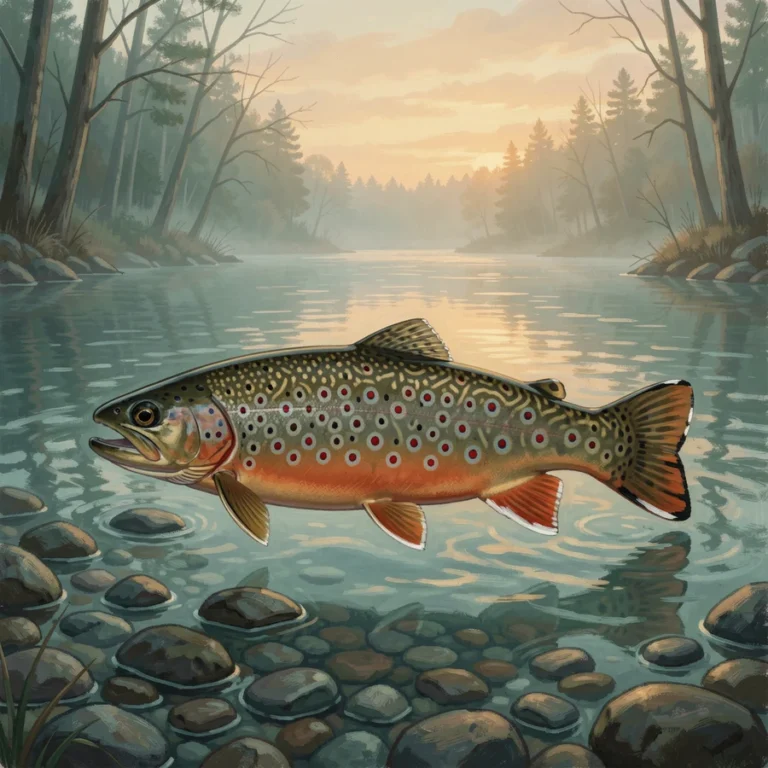
Brook Trout
Salvelinus fontinalis
Also called Speckled trout, specks, squaretail
The prettiest fish in Ontario and not a close contest. Olive back covered in pale wavy worm-track markings, sides scattered with red spots each ringed in blue, orange belly, and lower fins edged in crisp white with a black line behind it. Squared-off tail.
Small cold spring-fed streams and clean northern lakes. They are a water-quality indicator — where brook trout live, the water is genuinely cold and clean.
8–12 in from a stream. Northern lake fish run much bigger.
Worms, small spinners, or a fly. Small water means stay low and stay back — they see you long before you see them.
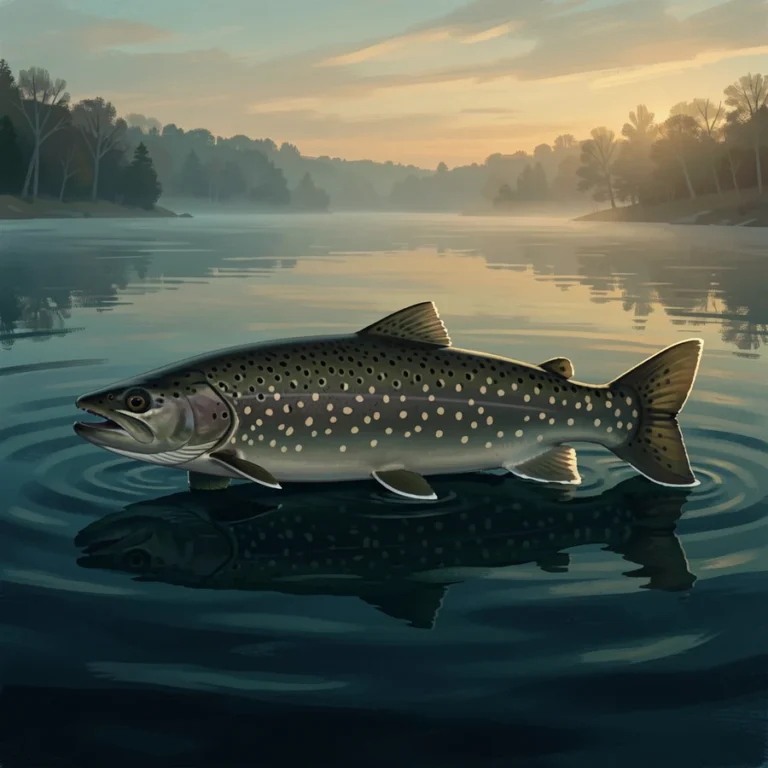
Lake Trout
Salvelinus namaycush
Also called Laker, togue, grey trout
Dark grey-green body covered in small PALE cream spots, a deeply forked tail, and a small adipose fin on the back. Pale spots on a dark body — the opposite of a brown trout.
Deep, cold, well-oxygenated lakes — Simcoe, Nipissing, Temagami, Superior and a long list of shield lakes. Shallow right after ice-out, then down deep all summer.
18–28 in common; deep-water fish can go much larger and are very old.
Trolling with downriggers or lead core in summer, casting spoons in the shallows after ice-out, jigging white tubes through the ice. Lakers grow slowly — a big one is decades old, so think hard before keeping it.
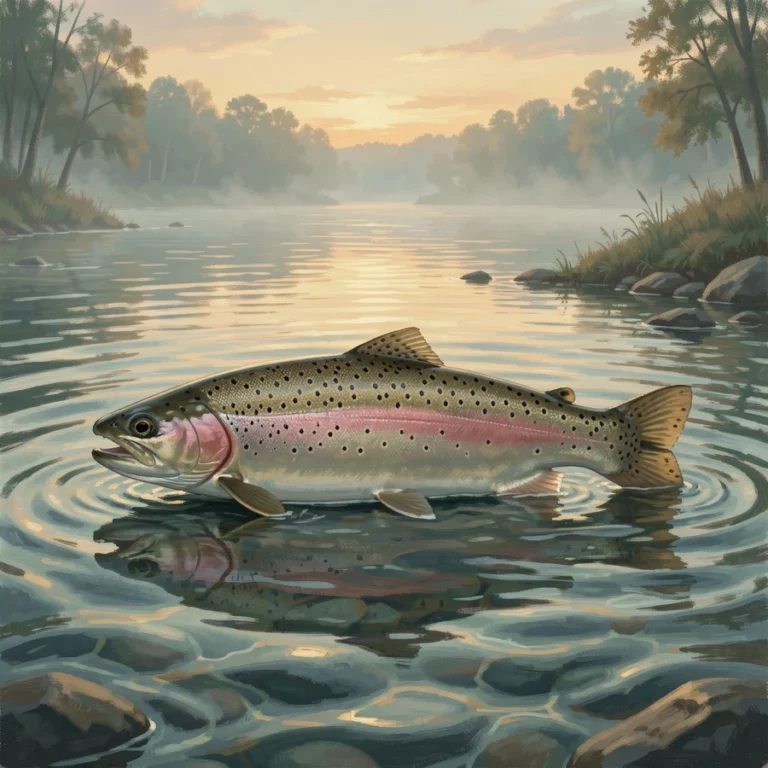
Rainbow Trout
Oncorhynchus mykiss
Also called Bow
Silvery olive with a broad rose-pink stripe along the side and fine black speckles over the back, dorsal fin and tail. Small adipose fin.
Stocked lakes, cold streams, and the tributaries of the Great Lakes. The lake-run form is the steelhead below.
10–16 in in an inland stream; much larger in the Great Lakes system.
Small spinners, spoons, worms, flies. In stocked lakes they cruise — cover water rather than sitting on one spot.
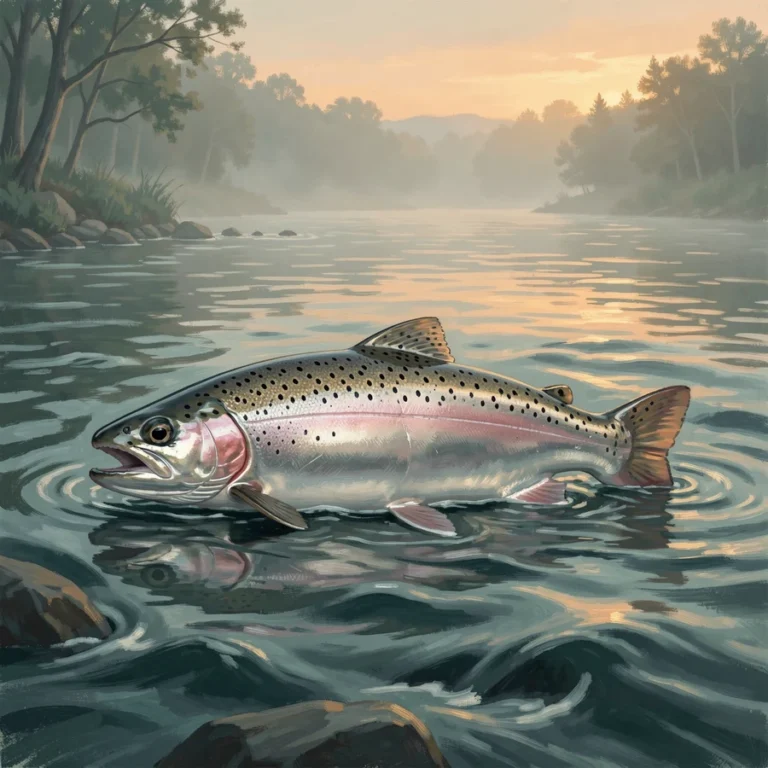
Steelhead
Oncorhynchus mykiss
Also called Lake-run rainbow
The same species as a rainbow trout, grown large in the Great Lakes and running up the tributaries. Chrome-bright silver, only a faint pink wash, small black spots over the back and tail. A fresh one looks like polished metal.
Great Lakes tributaries — the Grand, the Saugeen, the Ganaraska, the Niagara and the north shore rivers. They run in fall and again in spring.
24–30 in is a solid fish and it will not feel solid, it will feel unstoppable.
Float fishing with roe bags, small beads, or flies. Cold feet, early mornings, and a lot of walking. Check the regulations carefully — tributary rules are their own thing, with specific open seasons and sanctuary sections.
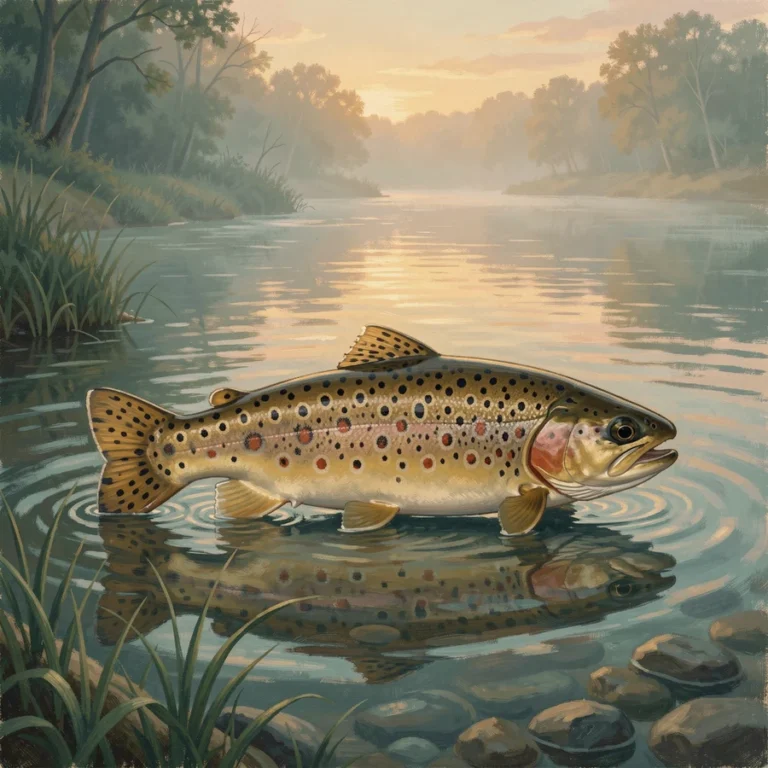
Brown Trout
Salmo trutta
Also called Brownie
Buttery golden-brown with large black spots AND scattered rust-red spots, many ringed by a pale halo. Squared tail with few or no spots on it. Dark spots on a light body — the opposite of a lake trout.
Cool rivers and streams across southern Ontario, including the Grand, plus a Great Lakes population that runs the tributaries.
10–18 in in a stream. Lake-run fish get much bigger.
Flies, small spinners, and drifted bait. The most cautious trout of the lot — a big brown holds under a cut bank and feeds at night. Fish the low light.
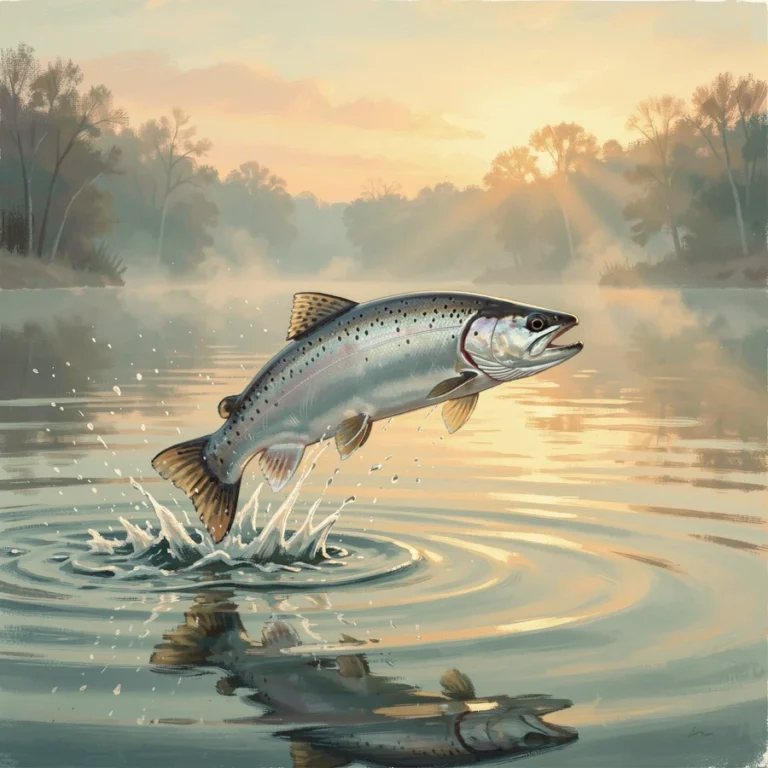
Chinook & Coho Salmon
Oncorhynchus tshawytscha / kisutch
Also called King salmon (chinook), silver salmon (coho)
Big, silver, deep-bodied fish with black spots on the back and tail. A chinook has a black mouth and black gums; a coho has a white gum line with a dark tongue. Both darken and turn ragged as they run the rivers in fall.
Lake Ontario and Lake Huron mainly, plus the rivers they run up in September and October.
Chinook commonly run 15–30 lb. Coho are smaller and faster.
Downrigger trolling out on the lake through summer; float and fly gear in the rivers during the fall run. They are at the end of their life cycle when they run — many are not worth keeping by then.
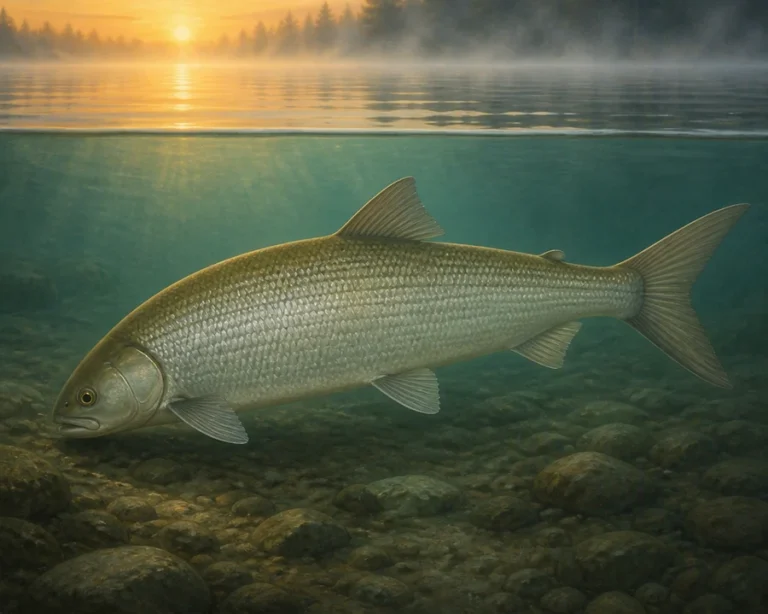
Lake Whitefish
Coregonus clupeaformis
Also called Whitefish
A bright silver slab-sided fish with an olive back, big smooth scales, a small adipose fin, and a small blunt snout that overhangs a small toothless mouth set underneath. No spots, no stripes.
Deep cold lakes right across the province. A mainstay of the winter fishery on the big lakes.
16–22 in typical.
Small jigging spoons tipped with a minnow head, fished right on the bottom, mostly through the ice. Soft biters — watch the line, not the rod. Excellent eating, and outstanding smoked.
Panfish
How most of us started — and still the best fish for a kid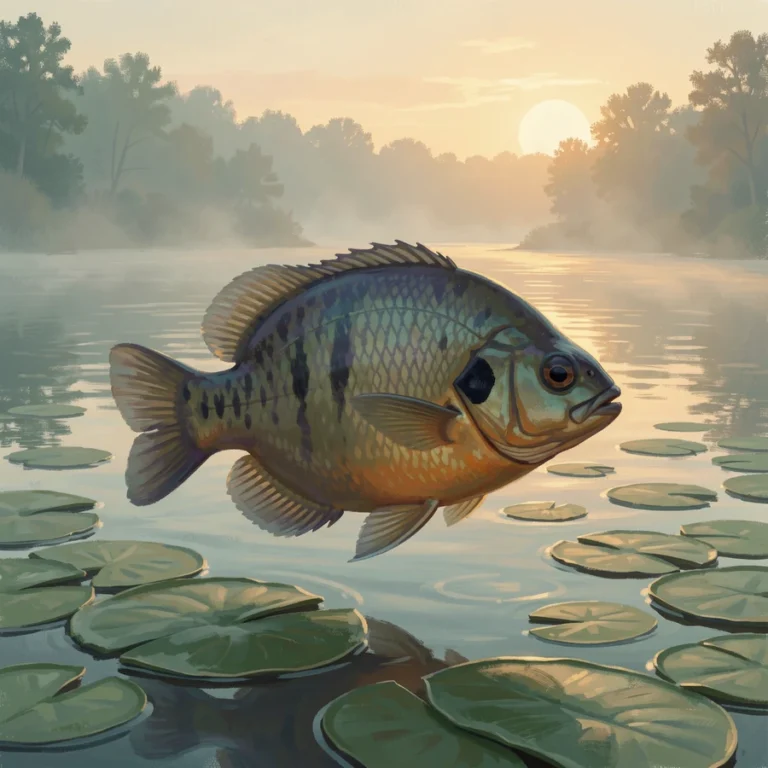
Bluegill & Sunfish
Lepomis spp.
Also called Sunfish, pumpkinseed, sunnies
Deep round flat-sided fish with a tiny mouth and a dark flap at the back of the gill cover. Bluegills go olive with a blue-purple sheen and an orange breast; pumpkinseeds are speckled orange and turquoise with a red spot on the ear flap.
Any weedy shallow bay, dock or lily pad edge in southern and central Ontario. They are everywhere, and they are willing.
5–8 in. A 9 in bluegill is a slab.
A worm under a bobber. That is the whole method, and it has taught more kids to fish than every other technique combined.
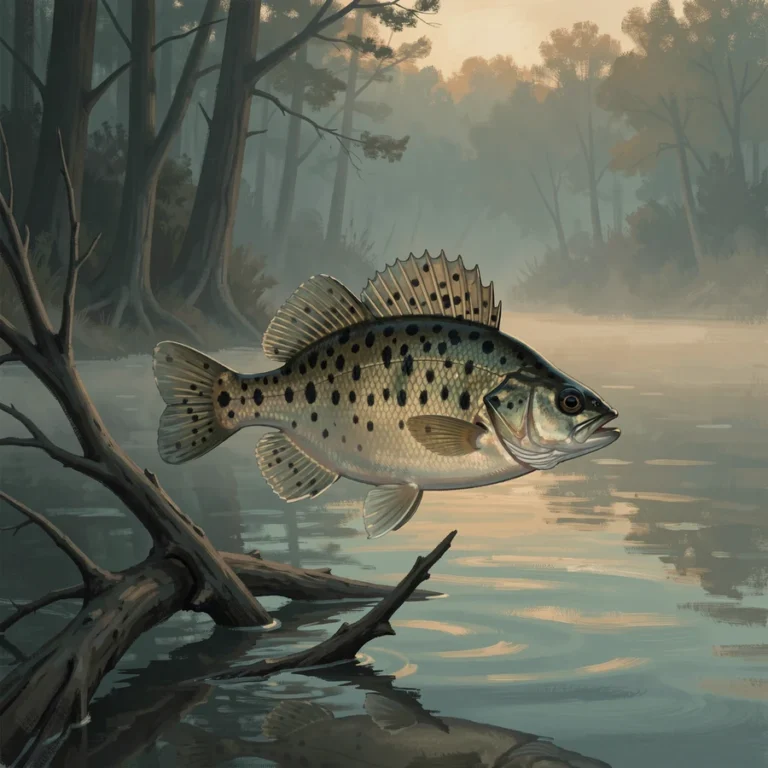
Black Crappie
Pomoxis nigromaculatus
Also called Speckled bass, calico bass
Deep, almost round silvery-olive body covered in irregular dark speckles scattered at random — not in neat bars. Large arched back, big dark eye, small upturned mouth, and a paper-thin mouth membrane that tears easily.
Sunken wood, brush piles and weed edges, mostly in southern and central Ontario lakes and slow rivers. They school tightly and suspend.
8–12 in.
Small jigs and minnows fished slowly under a float, and again through the ice. Set the hook gently — pull hard and you will tear straight out.
The Big & The Old
Underrated, over-maligned, and in one case older than your grandfather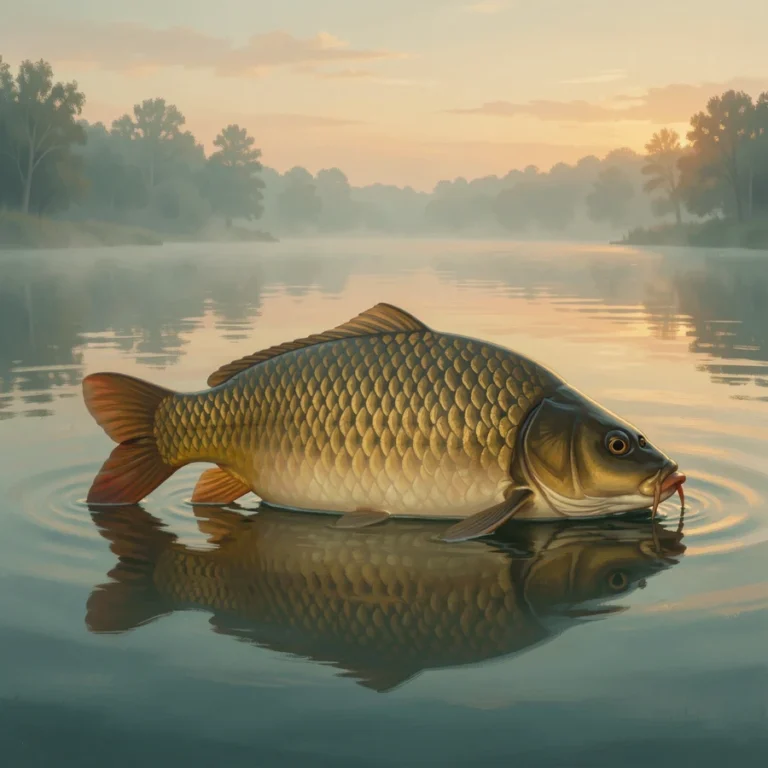
Common Carp
Cyprinus carpio
Also called Carp
Heavy deep body under large golden-bronze scales in neat rows, a blunt rounded snout, thick rubbery lips, and two pairs of short barbels at the corners of the mouth. One long dorsal fin running down the back.
Warm slow water — southern Ontario rivers, harbours, canals and shallow bays. Not native, and abundant.
5–20 lb is ordinary. Thirty-pounders exist and are not rare.
Sweetcorn, boilies or dough on a hair rig, fished on the bottom with the rod in a rest. Dismissed for years in Ontario and taken very seriously everywhere else — a big carp will empty a reel faster than most fish on this page.
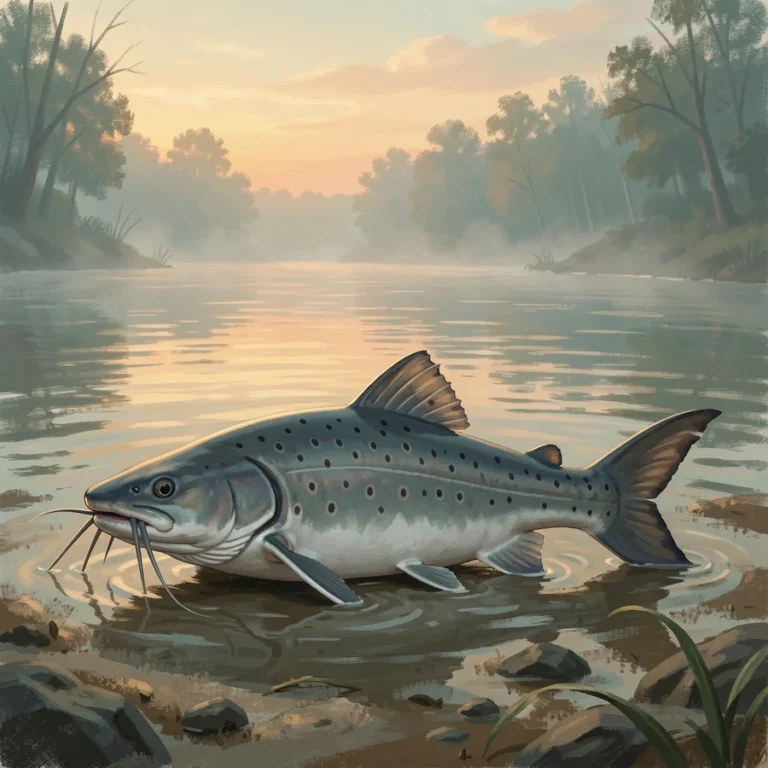
Channel Catfish
Ictalurus punctatus
Also called Channel cat
Smooth scaleless slate-blue to olive body with a white belly, scattered dark spots along the sides, four pairs of long barbels around a broad mouth, and a deeply forked tail. The spines in the dorsal and pectoral fins are sharp — handle them carefully.
Slow warm rivers and river mouths in southern Ontario — the Grand, the Thames, the Bay of Quinte, Lake St. Clair.
3–10 lb common, bigger in the big rivers.
Cut bait or worms on the bottom after dark. Simple gear, hard pulls, and largely to yourself on a summer night.
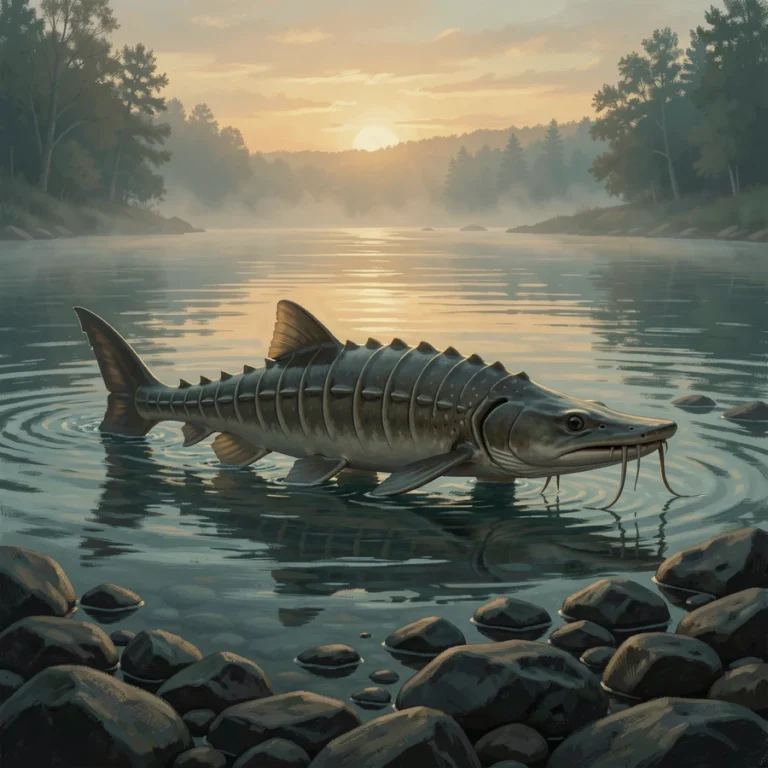
Lake Sturgeon
Acipenser fulvescens
Also called Sturgeon
Species at risk — check the regulations before you fish anywhere they liveUnmistakable. A prehistoric olive-grey fish with a long shark-like upturned tail, five rows of bony plates called scutes down the back and sides, a long flattened snout with four fleshy barbels underneath, and a toothless sucker mouth. No scales anywhere.
Large rivers and lakes — parts of the north, the Ottawa, and some Great Lakes waters.
They reach well over five feet and can live more than a century.
This one is here so you can recognise it, not so you can target it. Lake sturgeon is a species at risk in Ontario and populations are closed to fishing across most of the province, with heavy restrictions where any fishery remains. If you hook one by accident, keep it in the water, support its body, and release it immediately — then check the regulations for the water you are on.
No fish match that search. Try a shorter word.
Also out there
Fish you will catch sooner or later, even if you were not trying to
- Rock BassPalmed-sized, olive-brown, blazing red eye. Lives on the same rock as smallmouth and hits the same lures. Kids love them.
- PumpkinseedThe orange-and-turquoise sunfish with the red-tipped ear flap. Shallower and prettier than a bluegill.
- Brown BullheadSmall stocky catfish with a square tail and no spots. Warm muddy water, active at night, sharp fin spines.
- SaugerWalleye's smaller cousin — dark blotches instead of a faint bar pattern, spots on the dorsal fin, no white tail tip. Mostly the far north and northwest.
- BowfinAncient, mean-looking, long dorsal fin down the whole back, bony head. Native and harmless to your fishery, despite its reputation.
- Longnose GarA living arrow — long armoured body and a beak full of needle teeth. Warm weedy bays and river mouths in the south.
- BurbotFreshwater cod. Mottled, eel-like tail, single barbel on the chin. Caught through the ice at night, and much better eating than it looks.
- SplakeA stocked brook trout × lake trout cross. Looks like a brook trout with a slightly forked tail. Put into lakes that cannot hold either parent species.
- Atlantic SalmonNative to Lake Ontario, wiped out in the 1800s, and the subject of a long restoration effort. Spots mostly above the lateral line, X-shaped.
- Freshwater DrumAlso called sheepshead. Deep silver body, humped back, downturned mouth. Grunts audibly when you land it.
- White BassSilvery with fine horizontal stripes, schooling in the Great Lakes and Lake St. Clair. Hits anything small and shiny when the school is up.
- CiscoAlso called lake herring. Slim silver whitefish relative of the deep cold lakes. A key forage fish for lake trout.
- White SuckerDownturned rubbery mouth, bronze body, bottom-feeding. Runs up streams in huge numbers in spring.
Before you keep anything
Seasons, size limits and catch limits depend on which Fisheries Management Zone you are standing in, and they change. Know your zone before you put a fish in the cooler.
Fishing regulations → Grand River rules →Got a fish you cannot identify, or think something here is wrong? I would rather be corrected than leave bad information sitting on the page. Send me a note.